

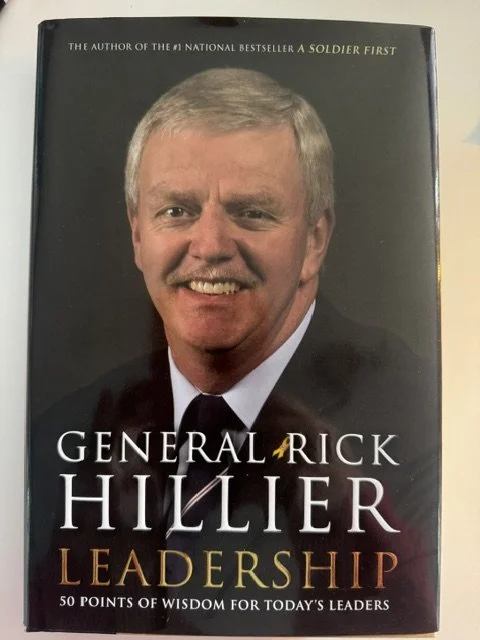
What General Rick Hillier's Leadership: 50 Points of Wisdom for Today’s Leaders taught me about leading others, communicating honestly, and knowing when to step back.
Some books give you answers. Others make you question the answers you thought you had.
That's what I look for when I read, and it's what I found in Leadership: 50 Points of Wisdom by General Rick Hillier.
His leadership lessons have made me think differently about how I lead and how often my instinct to help can get in someone else's way. And they stay with me because they come from experience - not a formula.
Why this book?
What drew me to Leadership: 50 Points of Wisdom is that it isn't polished theory. It's a career of hard lessons, told plainly, often at Hillier's own expense. The lessons came from years of making difficult decisions, accepting responsibility, and leading people through situations with life altering consequences.
I have never stood on a battlefield. My work happens in comfy offices and boardrooms. That gap is exactly why Hillier’s perspective matters to me. He made decisions before the outcome was known, and carried the responsibility himself. Frameworks explain leadership in hindsight. Experience teaches it in real time.
One idea I can't stop thinking about
You cannot learn something for someone else.
You can create the conditions for someone to learn, offer guidance; you can even stand nearby. The learning itself still has to happen within them.
I've been sitting with this in more than one part of my life this year. Parenting a transition age kid.. Coaching a team through a change they didn't choose. Helping a leader learn to see three moves ahead.
My instinct is to close hand them the insights that save them the stumble. But there's a big difference between helping someone find their way and finding it for them. Their own experience teaches what advice alone cannot. People need the opportunity to make decisions, face challenges, and develop their own judgment.
That doesn't mean leaving them to figure everything out alone. It means knowing when to offer support and when to give them the space to learn.
Sometimes, that's harder than giving them the answer.
How it shaped the way I lead and communicate
Three ideas from this book are shaping how I work.
Words matter; Actions matter more.
What you do is the message. Everything else is commentary.
Words are easier to control than behaviour. You can carefully craft an announcement, explain a decision, and promise change. People pay more attention to what happens next.
When actions don't match the message, people notice. No amount of carefully chosen language can make up for that disconnect.
Moral courage.
For Hillier, moral courage isn't an abstract leadership value. It's about making difficult decisions, speaking honestly, and taking responsibility for the outcome. It means making the unpopular call, telling people the hard truth before they discover it another way, and accepting responsibility even when the circumstances weren't entirely within your control.
I think about this often in communications.
It's easy to delay an uncomfortable conversation or soften a message until it loses its meaning. Avoiding the difficult truth rarely protects the people affected by it.
People won't always like what you have to say.
Moral courage in leadership isn't about being confrontational. It's about being accountable, especially when the easier choice is to say nothing.
Long-term thinking.
Hillier talks about leaders who "think long." They pay attention to the signals, consider what may be coming, and act before circumstances force their hand.
In communications work, I see the difference this approach makes. Especially when you realize that recognizing warning signs can prevent a crisis.
Good leaders don't have to predict everything. They do need to look beyond what's immediately in front of them and make decisions while there's still room to influence the outcome.
How I apply the lessons
These ideas have become reminders I return to in my own work and life.
Let the lesson belong to them.
I try to stop myself from closing the gap too early, whether it's for a client, a team member, or my own child. I can offer guidance, but the insight needs to come from their own experience if it's going to stay with them.
Say the hard thing before it becomes obvious.
Moral courage in communication means being honest about what's changing while there's still time for people to prepare. Waiting until everyone can see the problem doesn't make the conversation any easier.
Watch behaviour, not just messaging.
When I'm advising a leader through change, we plan both what they do, not just what they say. That's what their people are watching.
Read the signals early.
Long-term thinking means filtering out the noise to see the signals of what's coming next. The earlier we recognize a problem, the more options we have to address it.
Why I love reading
Books like this are why I read. They challenge how I think about leadership. Knowing something and learning it for yourself are two different things.
Hillier’s world is far from mine, but his reflections made me rethink some of my instincts. I don’t always need to have the answer. Even when I do, sharing it isn’t always the most helpful thing. Sometimes the better choice is to listen, support, and let someone discover what they can do on their own.
We don’t need to share someone’s circumstances to learn from them. Seeing the world through their eyes is what makes us grow.
A Moment to Remember
Tomorrow is Remembrance Day in Canada, a time to honour those who gave their lives in service to our country, recognize those who have served, and acknowledge those who continue to serve today.
It's also a time to remember the families who carry the weight of that service and sacrifice.
11 a.m.wherever you are: pause, reflect, and remember. If you're able, consider attending a local Remembrance Day ceremony: Find a Ceremony
Lest we forget.