

Mental Health Awareness: Why Personal Stories Help Us Feel Less Alone
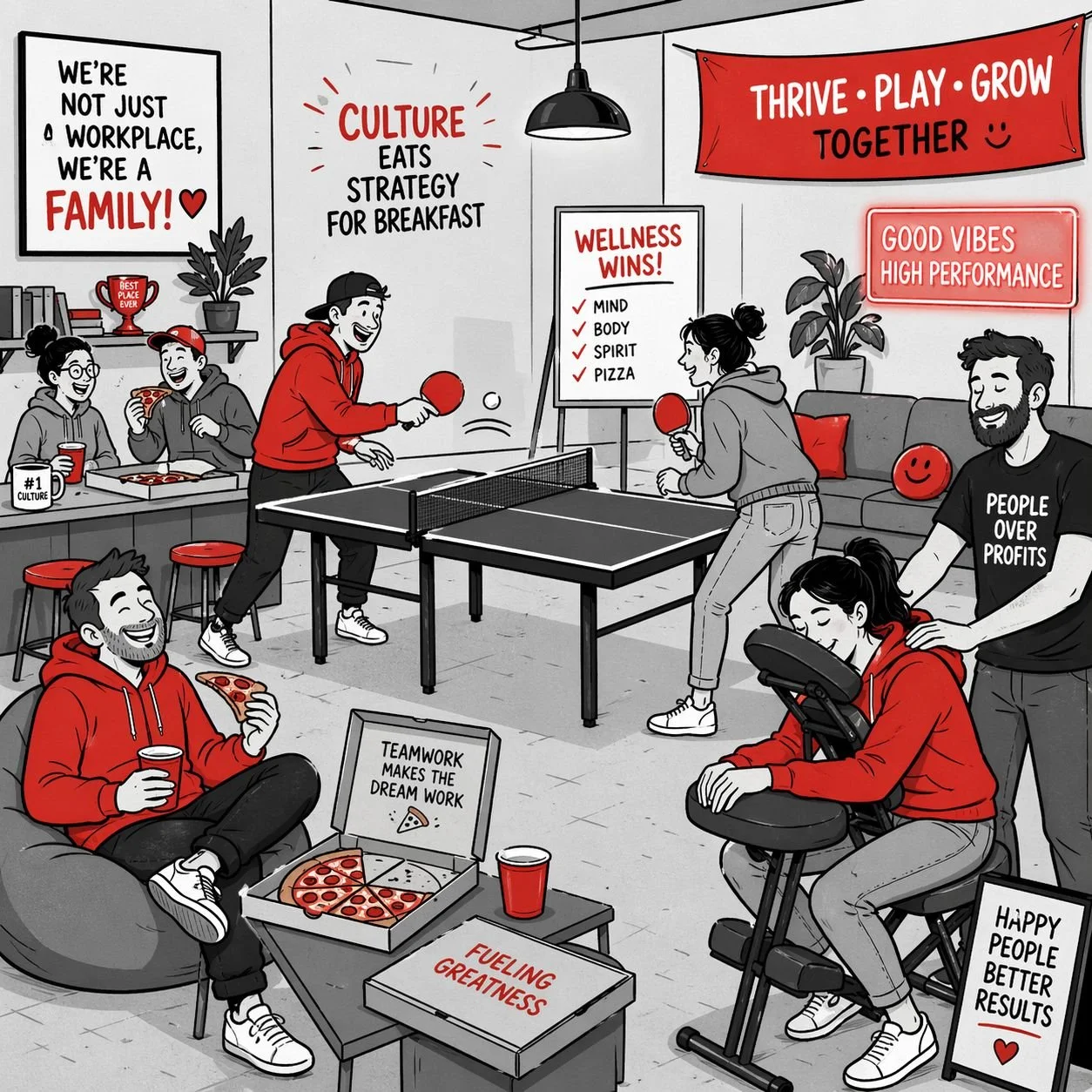
This week in Canada is a reminder that mental health is not a corporate theme you fix with a poster or pizza in the lunchroom. It's human. It's about the things people carry that no one else can see.
I've navigated periods when things didn't feel clear or steady — when it would have been easy to drift, or to question whether I would stay afloat. Across nearly three decades in healthcare, manufacturing, global business services, life sciences, and the not-for-profit sector, I've also seen what happens for people when organizations are clear, connected, and grounded in purpose — and when they're not. The difference isn't only in performance. It's in how people experience the work, the change around them, and themselves inside it.
Across industries, organizations, and geographies, I've seen that connection changes what people believe is possible. When people feel seen, heard, and understood, something shifts. They don't feel alone in it anymore. And that matters.
Personal stories have the power to help us make sense of our experiences and remind us that we are not alone (The power of storytelling for health impact).
That's part of why I serve as a volunteer Board Member with Unsinkable — an organization that creates spaces where stories are held with care, where people can find strength without feeling like something in them needs to be fixed. As Silken Laumann — Unsinkable's founder — has said, "When people share their lived experiences openly and honestly, something powerful happens." I have seen, through Unsinkable's work, how personal stories reduce stigma around mental health and open conversations that may not otherwise happen.
Stories don't only express experience. They connect us. They help us make sense of what we're carrying. And they remind us that even in difficult moments, there is still a path forward.
The same is true at work. Healthy workplaces are not built on posters, pizza, or ping pong tables. They are built by leaders who create the conditions in which people can feel seen, heard, and not alone — connected to their work, to the organization's purpose, and to one another. That takes human-centred leadership. Realistic workloads. Clear expectations. Psychological safety. And trust that survives the hard moments.
And beyond the workplace, it comes down to something simpler.
Looking out for yourself. And looking out for each other.
Because you never really know what someone is carrying.
Be well.